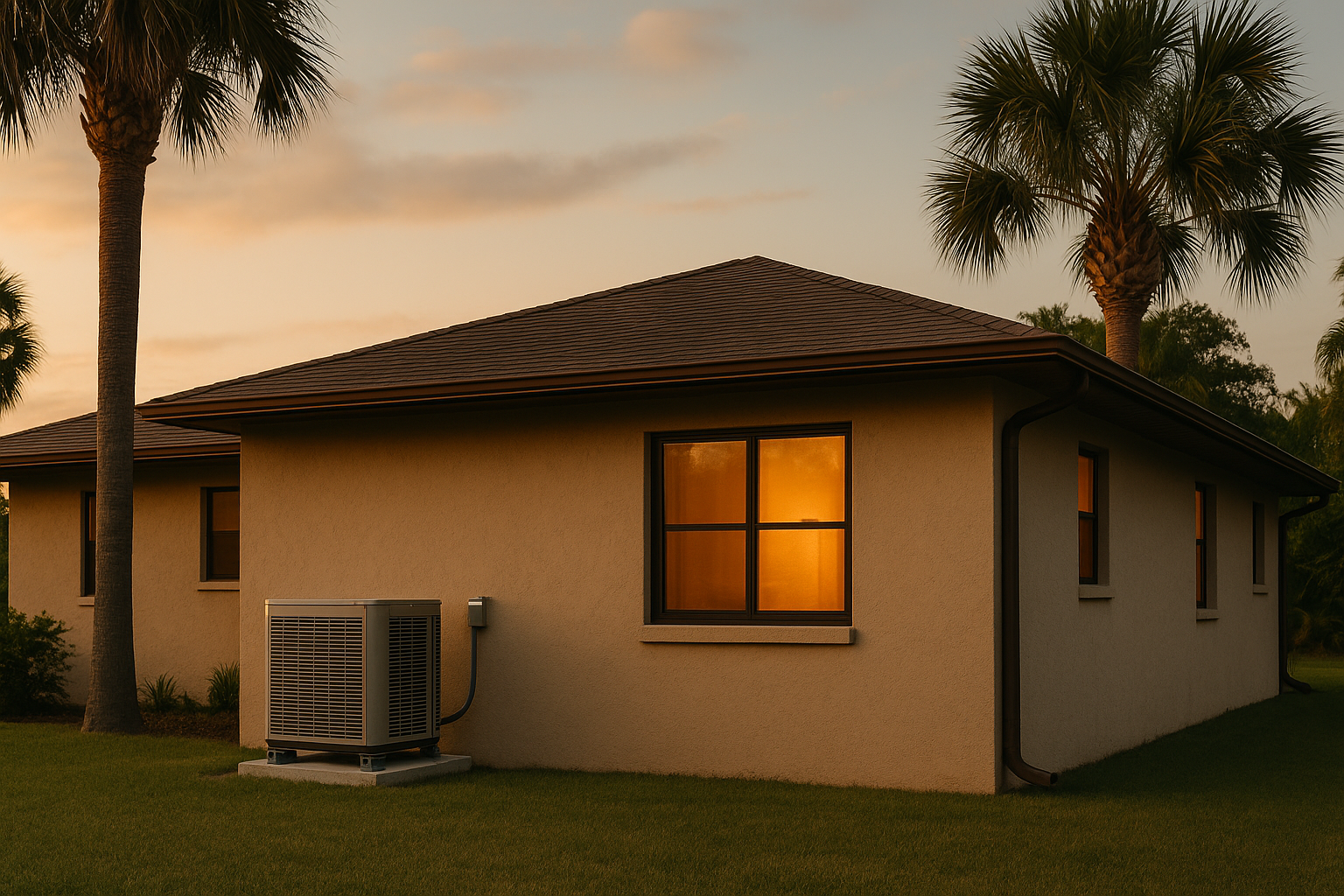
Does a rebate program built mostly around retiring gas furnaces and oil boilers make sense in a state where most homes already heat with electricity? For Florida homeowners, the answer depends on three things: the equipment being replaced, household income compared with the local median, and whether the state program is taking applications when it is time to buy.
The Inflation Reduction Act created the Home Electrification and Appliance Rebate program (HEEHRA, which the U.S. Department of Energy now calls HEAR), and each state runs its own version. Florida's climate, building code, and storm exposure also change what a qualifying upgrade looks like in practice, and those differences matter as much as the dollar caps.
HEEHRA is a federally funded, state-administered point-of-sale rebate for heat pumps and other electrification upgrades. In Florida, the state energy office, the Office of Energy within the Department of Agriculture and Consumer Services, oversees it.
Where Florida's HEEHRA Program Stands
Florida's path to launching these rebates has been less direct than in many states. In 2024, spending authority for the federal home energy rebate dollars was vetoed out of the state budget, and the question has come back through the state's budget process since then.
Because status can change from one budget cycle to the next, we track Florida alongside every other state in our HEEHRA state-by-state status tracker. Keep in mind that DOE's formula gave Florida roughly $346 million across the two IRA home energy rebate programs combined, so a lot of money is at stake before a single application opens.
Before a rebate goes into a signed contract, three items are worth confirming directly with the FDACS Office of Energy:
- Program status. Whether HEEHRA applications are open, waitlisted, or not yet launched for your county. The answer sets the timeline for everything else.
- Contractor enrollment. Whether your installer is registered with the program. The rebate is applied at the point of sale through participating contractors.
- Income verification method. Which documents the state accepts, such as tax returns, enrollment in a qualifying assistance program, or another pathway.
All of these details come from the state's final program design, which DOE must approve before any rebates are paid. As a result, a quote that counts on a rebate before the program is live depends on a number nobody can guarantee yet.
HEEHRA Rebate Amounts: The Federal Caps
The dollar caps are written into federal law, so they work the same way in Florida as in Arizona, Ohio, or Virginia. What varies by state is administration: rollout timing, contractor networks, and any extra equipment requirements the state adds.
Here's how the per-upgrade caps break down under the IRA:
| Upgrade | Maximum Rebate | Florida Relevance |
|---|---|---|
| Heat pump HVAC (heating and cooling) | $8,000 | Largest single item; can replace strip-heat AC, gas furnaces, or aging systems |
| Heat pump water heater | $1,750 | Works well in warm garages; dehumidifies as it runs |
| Electric load service center (panel) | $4,000 | Common need in older homes with 100-amp service |
| Electric wiring | $2,500 | New circuits for added electric equipment |
| Insulation, air sealing, ventilation | $1,600 | Attic insulation directly reduces cooling load |
| Electric stove, cooktop, range, or oven, or heat pump clothes dryer | $840 | Replaces natural gas or propane cooking |
| Household total | $14,000 | Ceiling across all eligible upgrades |
HEEHRA caps a heat pump for heating and cooling at $8,000 and limits each household to $14,000 across all eligible upgrades. These federal caps apply in Florida as written.
Note that the $14,000 figure is a ceiling for the household, not an allowance per project. For instance, a household that uses $8,000 on a heat pump and $4,000 on a panel upgrade has $2,000 left for anything else.
Income Limits: How Florida's AMI Tiers Work
HEEHRA eligibility depends on household income compared with area median income, or AMI, which is set by county and metro area. Our guide to HEEHRA income tiers walks through the math in detail, and the short version follows.
The three tiers work as follows:
- Below 80% of AMI. Eligible for up to 100% of project costs, within each per-upgrade cap and the $14,000 household limit.
- Between 80% and 150% of AMI. Eligible for up to 50% of project costs, within the same caps.
- Above 150% of AMI. Not eligible for HEEHRA. Utility programs and other incentives may still apply.
Florida households below 80% of area median income can receive up to 100% of eligible costs, and households between 80% and 150% can receive up to 50%. Above 150% of AMI, HEEHRA does not apply.
Area median incomes vary widely across Florida, so the county you live in matters as much as what you earn. An income that falls under the 80% line in one county can land in the 50% tier, or above the cutoff, a few counties away.
Household size also changes the threshold, since AMI tables are set by the number of people in the home. Remember to check the figure for your county and household size instead of relying on a statewide average.
Why Florida's Climate Changes the Equipment Math
Most HEEHRA coverage centers on cold weather: how a heat pump holds capacity at 5°F, how much backup heat it needs, and how defrost cycles affect comfort. In Florida, the engineering problem mostly runs the other way.
Florida sits in IECC climate zones 1 and 2, with winter design temperatures from the high 20s in the Panhandle to the 40s in South Florida. Summer design temperatures, however, sit in the low 90s across the state, and the humidity that comes with them often shapes equipment choice more than the temperature does.
SEER2 and EER2 Carry More Weight Than HSPF2
Because cooling accounts for most of the year's run hours, SEER2 (seasonal cooling efficiency) and EER2 (efficiency at a steady, hot test condition) tell a Florida homeowner more than HSPF2 does. Keep in mind that HSPF2 still matters in North Florida, where a cold January week can work a heat pump harder than many buyers expect.
For HEEHRA, DOE ties heat pump eligibility to ENERGY STAR certification, and states may add stricter requirements. Accordingly, ask your installer for the AHRI certificate number for the exact matched system, including the outdoor unit, indoor coil or air handler, and any furnace or fan coil, so the rating can be checked.
Humidity, Latent Load, and Short-Cycling
An oversized system cools a Florida house quickly and shuts off before the coil has run long enough to pull moisture out of the air. The house reaches the thermostat setting but still feels clammy, and in some cases mold starts to grow.
Variable-speed inverter heat pumps help because they can run at low output for long stretches, which removes more moisture at part load. That said, variable speed cannot fix a system that is badly oversized, which is why sizing matters so much.
In Florida, an oversized heat pump short-cycles and leaves humidity behind. Variable-speed equipment sized from an ACCA Manual J load calculation handles moisture better than a larger single-stage unit.
Manual J Is the Starting Point
The energy volume of the Florida Building Code, like the IECC it is based on, calls for sizing heating and cooling equipment with ACCA Manual S using loads calculated under ACCA Manual J. In practice, many replacement quotes still size by rule of thumb, either tons per square foot or simply the size of the old unit.
Our heat pump load calculator gives a rough check before quotes arrive. For ductless or zoned options, our mini-split sizing guide explains how room-by-room loads differ from whole-house tonnage.
What Hurricane-Zone Requirements Mean for Qualifying Installations
Florida's storm exposure brings installation requirements that a federal rebate program does not spell out. These costs show up in quotes, so it helps to know which line items the code requires and which are optional.
Hurricane-zone installation factors include but are not limited to:
- Wind anchoring. The Florida Building Code requires outdoor mechanical equipment to be secured against design wind loads, usually with engineered tie-downs or brackets fastened to the pad or roof. The permit inspection typically checks this.
- High-Velocity Hurricane Zone approvals. Miami-Dade and Broward counties are in the HVHZ, where products and anchoring methods generally need specific approvals, such as a Miami-Dade Notice of Acceptance. That can limit which equipment and mounting hardware a contractor can use.
- Flood elevation. In flood hazard areas, outdoor units generally have to sit at or above the design flood elevation, which can mean raised stands or platforms. Raising the unit also changes the route and length of the refrigerant line set.
- Coastal corrosion protection. Salt air wears down standard aluminum fins and coil joints, so many coastal installers specify coated coils or corrosion-resistant models. It is worth checking that the coated version of a model carries the same AHRI rating.
- Surge protection. Lightning and power disturbances during storms make surge protection, for the whole home or the equipment alone, a common add-on for inverter units with sensitive electronics.
Overall, these factors add cost without raising the rebate caps. HEEHRA covers qualified equipment and its installation, but whether items like a raised platform or a surge protector count as eligible costs depends on the state program rules, so itemized quotes are worth requesting.
If a raised stand or roof mount puts the outdoor unit farther from the air handler, our breakdown of line-set length limits is worth reading before you approve the layout. Long runs affect refrigerant charge, oil return, and rated capacity.
Replacing Strip-Heat AC, Gas Furnaces, and Older Heat Pumps
Many Florida homes already have a heat pump, and many others pair central air conditioning with electric strip heat in the air handler. Others, especially in North Florida, still run a natural gas or propane furnace.
Each starting point makes a different case for HEEHRA:
- Gas or propane furnace. This is the clearest electrification upgrade under the program's intent, since the heat pump replaces combustion heating entirely.
- Central AC with strip heat. Strip heat turns one unit of electricity into one unit of heat. A heat pump typically delivers two to three units or more at mild Florida winter temperatures.
- Existing heat pump. A like-for-like replacement improves efficiency, but whether it qualifies depends on Florida's final program rules. DOE gives states room to set eligibility details.
Be aware that replacement rules can differ from state to state. For example, compare our Arizona HEEHRA guide, which covers another cooling-dominant market, with our Virginia HEEHRA guide.
Heat Pump Water Heaters and Other Upgrades in a Florida Home
In a Florida house, the water heater is often the second-best HEEHRA opportunity. A heat pump water heater draws heat from the surrounding air, and in a Florida garage that air stays warm most of the year.
As a side benefit, the unit blows out cool, dry air, which can make a hot garage more comfortable. Keep in mind that it needs enough surrounding air and a condensate drain, so a small closet installation may need ducting or a louvered door.
HEEHRA caps a heat pump water heater at $1,750. In Florida, garage installations tend to perform well because the surrounding air stays warm most of the year, and the unit dehumidifies as it runs.
The remaining categories cover the infrastructure behind the equipment:
- Panel upgrades. An older Florida home with 100-amp service may need a new load center, capped at $4,000, before it can add a heat pump water heater and an induction range.
- Insulation and air sealing. On summer afternoons a Florida attic can run well above the outdoor temperature, so attic insulation, capped at $1,600, directly reduces the cooling load.
- Wiring. New circuits for added electric equipment are capped at $2,500, separate from the panel itself.
Reducing the cooling load first can also shrink the heat pump the house needs. That lowers both the upfront cost and the risk of oversizing.
Stacking HEEHRA With Florida Utility Programs
Florida's investor-owned utilities run conservation programs approved by the Florida Public Service Commission under the Florida Energy Efficiency and Conservation Act (FEECA). Florida Power & Light, Duke Energy Florida, and Tampa Electric have offered residential HVAC or efficiency incentives through these programs, and municipal utilities such as JEA and OUC run their own.
Utility incentive amounts and eligibility change with each program filing, so we do not publish fixed figures for them here. Our rebate stacking guide explains how point-of-sale rebates, utility incentives, and federal tax provisions fit together, and the federal tax credit status page tracks what is still available after the 2025 changes.
Note that the federal residential solar tax credit expired on December 31, 2025, so it no longer belongs in a Florida stacking plan. State and utility programs continue, but the federal solar credit does not.
One federal rule is firm: a household cannot use HEEHRA and the companion HOMES performance-based rebate for the same upgrade. Many utility programs also require pre-approval or a participating contractor, so the paperwork order matters before installation day.
A Decision Rule by Phase
How to use this information depends on where a household is in the process. Here's a phase-by-phase framework:
- Before purchase, with a working system. Program status and your AMI tier come first, followed by quotes gathered with our checklist for before you request installer quotes. If the program is not open yet, a working system leaves the option to wait.
- System failed in midsummer. A dead air conditioner in August rarely waits for a rebate launch. A Manual J, a matched AHRI certificate, itemized wind and flood line items, and the contractor's enrollment status are the items worth requesting.
- Mid-application. Income documents, the contractor's enrollment confirmation, and the itemized invoice belong together. Point-of-sale rebates depend on the paperwork matching the installed equipment.
Commissioning is the last step worth checking once the system is in. Our guide to refrigerant charge and commissioning explains what a correct startup looks like and how a wrong charge cuts into the SEER2 rating you paid for.
Common Questions About HEEHRA in Florida
Can a Florida landlord use HEEHRA for a rental building?
Owners of multifamily buildings can qualify when at least half of the residents meet the low- or moderate-income thresholds. Florida's final program rules govern how landlords apply and document tenant income.
Does a Florida heat pump replacement need a permit?
Florida jurisdictions generally require a mechanical permit for HVAC changeouts, and the inspection covers items like wind anchoring and electrical connections. A permitted, inspected installation also supports rebate documentation.
When does a Florida household receive the HEEHRA rebate?
HEEHRA is designed as a point-of-sale rebate, so the discount is applied on the contractor's invoice instead of being reimbursed months later. That is why contractor enrollment and income verification come before installation.
Find Out Where Florida's HEEHRA Program Stands
Florida homeowners can benefit from HEEHRA in ways that look different from cold-climate states: fewer furnace conversions, more strip-heat replacements, and installation requirements shaped by hurricanes, floods, and salt air. The federal caps and income tiers are fixed, while program status, the contractor network, and replacement rules are Florida's to decide.
For the latest status and how Florida compares with its neighbors, visit our HEEHRA state guide hub. For Southeast utility incentives, see our Georgia Power rebate guide.
This article is for informational purposes and is not financial / tax / legal / medical advice. Consult a licensed professional (CPA, elder-law attorney, HVAC contractor, state Medicaid office) before acting.