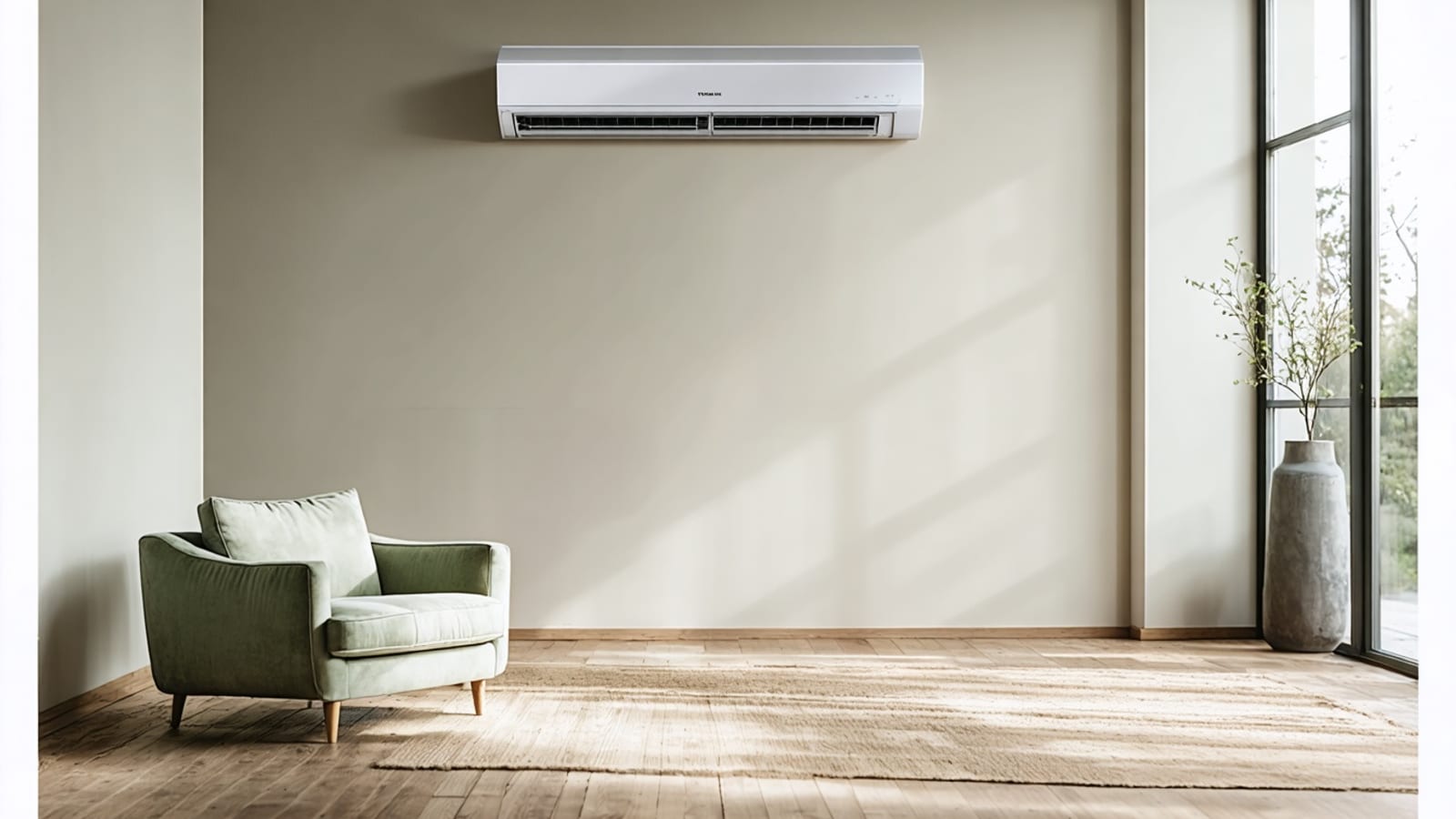
The question of mini-split versus central ducted heat pump used to have an easy answer: if you have ducts, use them. That logic has broken down in 2026. Ductless technology has matured to the point where multi-zone mini-splits can heat and cool an entire 2,000 square foot home, often at higher efficiency than a central system, and frequently for similar total installed cost.
This comparison lays out the real tradeoffs without sales-pitch spin. Both systems have fitting scenarios, and the answer depends more on your house than on the equipment class.
Upfront cost, apples to apples
Central ducted heat pump systems run $14,000 to $24,000 installed pre-rebate for a typical whole-home setup in 2026. That figure covers a 3-5 ton outdoor condenser, an indoor air handler, refrigerant lines, electrical work, and condensate management. It assumes existing ducts are in usable condition.
Mini-split pricing splits in two. A single-zone setup (one outdoor unit, one indoor head) runs $4,000 to $8,000 installed. A multi-zone whole-home system with 4-6 indoor heads runs $12,000 to $20,000 — remarkably close to central ducted pricing.
Where the comparison shifts is in homes without existing ducts. Retrofitting ductwork into a 1940s cape or a balloon-framed house adds $8,000-$15,000 to a central install, pushing total cost past $30,000. Mini-splits skip this entirely because they need only a 3-inch hole per indoor head for refrigerant, drain, and power.
Install complexity and permitting
A central ducted install is a three-to-five-day project for a typical crew. It involves refrigerant handling, duct sealing, electrical subpanel work, and often mechanical inspection. If existing ducts need replacement or repair, that extends to a week or more.
A single-zone mini-split can be installed in a day. A 4-head multi-zone job runs two to three days. Refrigerant line sets are pre-charged and sealed, electrical demand is lower per unit, and there's no ductwork to inspect.
This matters for rebate timing. Short install windows mean fewer permitting hangups, and HEEHRA point-of-sale processing goes through faster when there are fewer subcontractors involved.
Zoning and comfort
Zoning is where mini-splits win decisively. Each indoor head runs independently with its own thermostat, meaning the kitchen can be at 68 degrees while the bedroom is at 72. A central ducted system conditions the entire home to one setpoint unless you add a zoned damper system ($2,000-$4,000 additional).
For households with mismatched schedules, home offices, or rooms that only get used seasonally, ductless zoning pays back in comfort and operating cost. You only heat or cool the rooms that are occupied.
Central systems deliver more uniform temperatures across large open spaces. If your main living area is a 30-foot open-plan kitchen and living room, a single ceiling-mounted mini-split head may create uneven temperatures at the far edges, while a ducted system with multiple registers evens out airflow.
Aesthetics
Indoor mini-split heads are visible. They mount on walls, in ceilings, or as floor consoles, and even the lowest-profile models are a noticeable presence in a room. Ceiling cassette heads look best but cost $500-$1,000 more per head than wall units.
Central ducted systems are invisible once installed. The indoor air handler lives in a closet, attic, or basement, and supply registers sit flush in ceilings or floors. For homeowners doing high-end renovations, this aesthetic invisibility often decides the choice.
Some homeowners split the difference with a ducted mini-split system — a mid-size multi-zone unit that uses short-run ducts to serve multiple rooms through ceiling registers. Pricing falls between ductless mini-split and full central ducted.
Efficiency in practice
On rated efficiency, mini-splits generally win. Single-zone ductless systems routinely hit SEER2 22-30 and HSPF2 10-12, while central ducted heat pumps typically land at SEER2 16-20 and HSPF2 8-9.
Real-world efficiency is even more lopsided. Duct losses in an uninsulated or leaky duct system run 20-30%, meaning a central system's delivered efficiency to the room is significantly below its rated number. Mini-splits have no duct loss because there's no duct.
At 47 degrees F, a modern variable-speed mini-split achieves a COP of 3.5 to 4.5, meaning 3.5-4.5 units of heat per unit of electricity. A central system in the same conditions runs 3.0-3.8. At 5 degrees F, both drop to 2.0-2.5, but mini-splits hold their rated capacity more consistently thanks to direct refrigerant delivery.
One caveat: multi-zone mini-split efficiency drops modestly as head count increases. A five-head multi-zone system typically operates 10-15% less efficiently than a single-zone unit of equivalent total capacity, because the outdoor compressor has to modulate across unbalanced load demands. Single-zone ductless is still the efficiency peak, but whole-home multi-zone systems remain competitive with the best central ducted.
Cold climate capability
Cold-climate mini-splits have closed the gap with central systems decisively. Mitsubishi Hyper-Heat, Fujitsu Extra Low Temp, and Daikin Aurora models maintain full rated capacity down to -13 F and continue operating to -22 F.
Central cold-climate heat pumps from Carrier Infinity, Trane XV20i, and Bosch IDS Ultra offer similar performance envelopes, but they depend on duct quality to deliver heat efficiently to distant rooms.
For Minnesota, Vermont, Maine, and upstate New York, both options are viable without backup heat. Below roughly -15 F ambient, most homeowners still pair either system with an emergency resistance or gas backup for the coldest five to ten days a year.
The NEEP (Northeast Energy Efficiency Partnerships) cold climate heat pump list is the industry reference for verified low-temp performance. If your contractor is quoting a model not on the NEEP list for a cold-climate install, ask why — it's the fastest check on whether the equipment will actually hold capacity in January.
Retrofit scenarios
Four retrofit scenarios decide the choice for most homeowners.
Scenario 1: Good existing ducts, replacing an old gas furnace or AC. Central ducted heat pump wins. The ducts are a sunk asset, the air handler fits in the same closet, and the install is straightforward. Expect $14,000-$18,000 installed pre-rebate.
The key question in this scenario is duct condition. Have the contractor do a duct leakage test (usually $150-$300) before committing. If leakage is above 20%, you're looking at duct sealing work before the heat pump install, which changes the math.
Scenario 2: Poor or leaky ducts, or no ducts at all. Mini-split wins. Ductwork retrofit is expensive and intrusive, and the efficiency penalty of keeping bad ducts in place erodes heat pump economics.
Scenario 3: Adding conditioning to an unheated basement, addition, or sunroom. Single-zone mini-split wins. A 12,000-18,000 BTU single-zone runs $4,000-$6,000 installed and can be added without disturbing the main system.
Scenario 4: Whole-home electrification on a historic or architecturally sensitive house. Ducted mini-split or slim-duct system wins. Short-run duct mini-splits deliver central-style invisible registers without requiring full traditional ductwork.
Mitsubishi's SVZ, Fujitsu's low-static ducted, and Daikin's Vista series are the common choices here. Installed cost runs 15-25% higher than a comparable ductless multi-zone, but aesthetic outcomes are closer to what owners of high-end renovations actually want.
Rebate eligibility differences
Both mini-splits and central ducted heat pumps qualify for HEEHRA up to $8,000 for income-qualified households. Both qualify for HOMES rebates (performance-based up to $8,000).
Utility programs vary. Some programs cap rebates per outdoor unit, which favors central systems (one outdoor unit) over multi-zone mini-splits (still one outdoor unit). Others cap per indoor head, which penalizes multi-head mini-splits. A few programs offer bonus rebates for whole-home electrification, which can favor either system depending on structure.
Massachusetts Mass Save, for example, caps heat pump rebates by compressor size rather than per-head, which makes multi-zone mini-splits competitive with central ducted systems. California IOUs historically pay per-ton of capacity, which can favor central systems on larger homes. New York's Clean Heat program explicitly includes a bonus for ductless mini-splits in retrofits of older housing stock.
Manufacturer rebate behavior also differs. Mitsubishi and Fujitsu run active mini-split promotions most of the year. Central ducted rebates from Carrier, Trane, and Lennox tend to be seasonal and tied to specific variable-speed model families.
The rebate finder pulls current utility program rules by ZIP code and surfaces which system class maximizes your stack. For a detailed walkthrough of stacking rules, see the rebate stacking guide. The heat pump guide covers sizing and climate zone considerations in more depth.
The honest bottom line
There is no universal winner. For homes with quality existing ducts and owners who want invisible infrastructure, central ducted remains the straightforward answer. For homes without ducts, homes with heavy zoning needs, or owners who care about peak efficiency, mini-splits have become the stronger choice.
The worst outcome is letting a contractor make this decision for you based on what they install most often. Some shops do 90% central and recommend central reflexively; others do 90% ductless and recommend ductless reflexively. Getting a quote from one of each for a whole-home retrofit is a two-hour investment that frequently pays back in thousands of dollars of right-sizing.
The heat pump calculator models both scenarios against your ZIP code, income band, and rebate stack — so you can compare real net-of-rebate cost before a contractor walks in the door. The federal 25C status page covers what federal tax credits remain (spoiler: very little, and only for geothermal). Between the two, you can make this call without guessing.